Saturday, June 14, 2014

History Of Mobile Phones / Cell Phone Invention And History - Visionairebiz

History of mobile phones / Cell phone invention and history / Handheld mobile phone / Satellite mobile -


 Important stuffs you should, you must know about. Great information - Educative - Instructive - And Very Informative


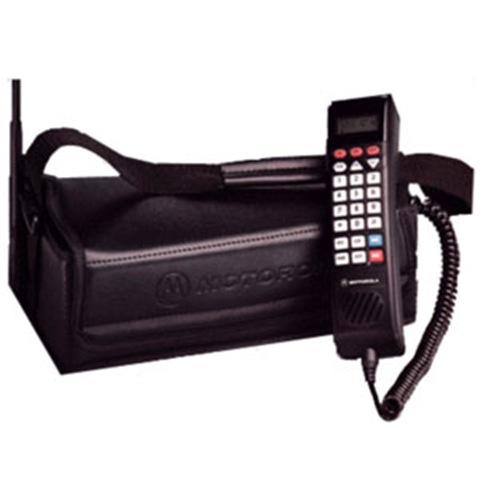
The first mobile telephones were barely portable compared to today's compact hand-held devices

Internet Blogs
The Most Interesting Blogs On The Web, The Most
Educative, Most Instructive -
Employment-Entrepreneurship- Investing & Finance''

''What About Network Marketing?
A Powerful Business Opportunity Of The 21 First Century.
How to get in? And how to make success?

'What About Social Media?
How to take advantage of the internet and social media to make money?  Success Tips And Resources / How To Find Clients & Prospects On Social Media to
grow your business?-
''About  Real estate investments: What everyone should know about the real estate market. How to find financing ''

About Insurance:
What exactly you should find out about your insurance company, policy and plan.''

''About financial education,
financial knowledge, financial literacy:
Economy-business-finance-investing'' -
 
What About  Employment - Entrepreneurship - Investing & Finance''

'About the stock market,
how to get in and how to get out financially safe and secure.
Financial academy school, Institution of finance business and economy.''

''About health care,
medical, nursing. How to advance your health care career, or how to
start in the health care industry...

Before the devices that are now referred to as mobile phones existed, there were some precursors. In 1908 a Professor Albert Jahnke and the Oakland Transcontinental Aerial Telephone and Power Company claimed to have developed a wireless telephone. They were accused of fraud and the charge was then dropped, but they do not seem to have proceeded with production

------------


'Real Estate Investing: Commercial And Residential With No Money, No Credit. Zero Down''-

''
Mortgage Pre-Approval Made Easy: Q&A / FHA Mortgage Loan Programs, USDA Loan Mortgage, VA Home Loans.''

''
Financial Literacy & Knowledge – Financial Education Is What Everybody Needs. GET IT HERE, & GET IT NOW! ''

''
Florida Real Estate Market News And Information. REAL ESTATE MARKET: TODAY’S GREAT DEALS OR NO DEALS!''
Beginning in 1918 the German railroad system tested wireless telephony on military trains between Berlin and Zossen.[3] In 1924, public trials started with telephone connection on trains between Berlin and Hamburg. In 1925, the company Zugtelephonie A. G.

was founded to supply train telephony equipment and in 1926 telephone service in trains of the Deutsche Reichsbahn and the German mail service on the route between Hamburg and Berlin was approved and offered to 1st class traveler

-----------

The Second World War made military use of radio telephony links. Hand-held radio transceivers have been available since the 1940s

-------------

Mobile telephones for automobiles became available from some telephone companies in the 1940s. Early devices were bulky and consumed high power and the network supported only a few simultaneous conversations.

Modern cellular networks allow automatic and pervasive use of mobile phones for voice and data communications.

-------------

The first fully automated mobile phone system for vehicles was launched in Sweden in 1956. Named MTA (Mobiltelefonisystem A), it allowed calls to be made and received in the car using a rotary dial. The car phone could also be paged. Calls from the car were direct d

----------

In the United States, engineers from Bell Labs began work on a system to allow mobile users to place and receive telephone calls from automobiles, leading to the inauguration of mobile service on 17 June 1946 in St. Louis, Missouri. Shortly after, AT&T offered Mobile Telephone Service.

--------------

In 1947 AT&T commercialized Mobile Telephone Service. From its start in St. Louis in 1946, AT&T then introduced Mobile Telephone Service to one hundred towns and highway corridors by 1948.

Mobile Telephone Service was a rarity with only 5,000 customers placing about 30 000 calls each week.

Calls were set up manually by an operator and the user had to depress a button on the handset to talk and release the button to listen.

---------------

AT&T introduced the first major improvement to mobile telephony in 1965, giving the improved service the obvious name of Improved Mobile Telephone Service. IMTS used additional radio channels, allowing more simultaneous calls in a given geographic area, introduced customer dialing, eliminating manual call set by an operator
--------------
Cell Phones — Old School vs. New School.
The first public telephone call placed on a portable cellular phone. Martin Cooper ( now chairman, CEO, and co-founder of ArrayComm Inc) placed that call on April 3, 1973, while general manager of Motorola's Communications Systems Division.

 It was the incarnation of his vision for personal wireless communications, distinct from cellular car phones.

 That first call, placed to Cooper's rival at AT&T's Bell Labs from the streets of New York City, caused a fundamental technology and communications market shift toward the person and away from the place.

------------
"People want to talk to other people - not a house, or an office, or a car. Given a choice, people will demand the freedom to communicate wherever they are, unfettered by the infamous copper wire. It is that freedom we sought to vividly demonstrate in 1973," said Martin Cooper.

Martin Cooperadded, "As I walked down the street while talking on the phone, sophisticated New Yorkers gaped at the sight of someone actually moving around while making a phone call. Remember that in 1973, there weren't cordless telephones, let alone cellular phones.

I made numerous calls, including one where I crossed the street while talking to a New York radio reporter - probably one of the more dangerous things I have ever done in my life."
Cell Phones — Old School vs. New School.

Following the April 3, 1973, public demonstration, using a "brick"-like 30-ounce phone, Cooper started the 10-year process of bringing the portable cell phone to market.
------------

Martin Cooper Today

Martin Cooper's role in conceiving and developing the first portable cellular phone directly impacted his choice to found and lead Array com, a wireless technology and systems company founded in 1992. ArrayComm's core adaptive antenna technology increases the capacity and coverage of any cellular system, while significantly lowering costs and making speech more reliable.

---------------


In the USSR, Leonid Kupriyanovich, an engineer from Moscow, in 1957-1961 developed and presented a number of experimental models of handheld mobile phones. The weight of one model, presented in 1961, was only 70 g and could fit on a palm

--------------

In 1965, Bulgarian company "Radioelektronika" presented on the Inforga-65 international exhibition in Moscow the mobile automatic phone combined with a base station. Solutions of this phone were based on a system developed by Leonid Kupriyanovich. One base station, connected to one telephone wire line, could serve up to 15 customers

------------------

In 1958 development began on a similar system for motorists in the USSR.[16] The "Altay" national civil mobile phone service was based on Soviet MRT-1327 standard. The main developers of the Altay system were the Voronezh Science Research Institute of Communications (VNIIS) and the State Specialized Project Institute (GSPI). In 1963 the service started in Moscow, and by 1970 was deployed in 30 cities across the USSR.

----------------

In 1966, Bulgaria presented the pocket mobile automatic phone RAT-0,5 combined with a base station RATZ-10 (RATC-10) on Interorgtechnika-66 international exhibition. One base station, connected to one telephone wire line, could serve up to six customers ("Radio" magazine, 2, 1967; "Novosti dnya" newsreel, 37, 1966).

One of the first successful public commercial mobile phone networks was the ARP network in Finland, launched in 1971.

-----------
Handheld mobile phone
Prior to 1973, mobile telephony was limited to phones installed in cars and other vehicles.[11] Motorola was the first company to produce a handheld mobile phone. On 3 April 1973 when Martin Cooper, a Motorola researcher and executive, made the first mobile telephone call from handheld subscriber equipment, placing a call to Dr. Joel S. Engel of Bell Labs.[17][18]

The prototype handheld phone used by Dr. Cooper weighed 1.1 kg and measured 23 cm long, 13 cm deep and 4.45 cm wide. The prototype offered a talk time of just 30 minutes and took 10 hours to re-charge.[19]

------------
Analog cellular networks – 1G
The first automatic analog cellular systems deployed were NTT's system first used in Tokyo in 1979, later spreading to the whole of Japan, and NMT in the Nordic countries in 1981.

The first analog cellular system widely deployed in North America was the Advanced Mobile Phone System (AMPS).[25] It was commercially introduced in the Americas in October 1983, Israel in 1986, and Australia in 1987.

AMPS was a pioneering technology that helped drive mass market usage of cellular technology, but it had several serious issues by modern standards.

------------
Digital cellular networks – 2G
In the 1990s, the 'second generation' mobile phone systems emerged. Two systems competed for supremacy in the global market: the European developed GSM standard and the U.S. developed CDMA standard.

These differed from the previous generation by using digital instead of analog transmission, and also fast out-of-band phone-to-network signaling. The rise in mobile phone usage as a result of 2G was explosive and this era also saw the advent of prepaid mobile phones.

In 1991 the first GSM network (Radiolinja) launched in Finland. In general the frequencies used by 2G systems in Europe were higher than those in America, though with some overlap. For example, the 900 MHz frequency range was used for both 1G and 2G systems in Europe

-----------

The second generation introduced a new variant of communication called SMS or text messaging. It was initially available only on GSM networks but spread eventually on all digital networks.

The first machine-generated SMS message was sent in the UK on 3 December 1992 followed in 1993 by the first person-to-person SMS sent in Finland.

The advent of prepaid services in the late 1990s soon made SMS the communication method of choice amongst the young, a trend which spread across all age

---------

Mobile payments were trialed in 1998 in Finland and Sweden where a mobile phone was used to pay for a Coca Cola vending machine and car parking.

Commercial launches followed in 1999 in Norway. The first commercial payment system to mimic banks and credit cards was launched in the Philippines in 1999 simultaneously by mobile operators Globe and Smart.

The first full internet service on mobile phones was introduced by NTT DoCoMo in Japan in 1999.

------------
Mobile broadband data – 3G
As the use of 2G phones became more widespread and people began to utilize mobile phones in their daily lives, it became clear that demand for data (such as access to browse the internet) was growing.

Further, experience from fixed broadband services showed there would also be an ever increasing demand for greater data speeds.

The 2G technology was nowhere near up to the job, so the industry began to work on the next generation of technology known as 3G.

The main technological difference that distinguishes 3G technology from 2G technology is the use of packet switching rather than circuit switching for data transmission

------------

The first pre-commercial trial network with 3G was launched by NTT DoCoMo in Japan in the Tokyo region in May 2001. NTT DoCoMo launched the first commercial 3G network on 1 October 2001, using the WCDMA technology. In 2002 the first 3G networks on the rival CDMA2000 1xEV-DO technology were launched by SK Telecom and KTF in South Korea

-------------

By the end of 2007, there were 295 million subscribers on 3G networks worldwide, which reflected 9% of the total worldwide subscriber base. About two thirds of these were on the WCDMA standard and one third on the EV-DO standard. The 3G telecoms services generated over 120 Billion dollars of revenues during 2007 and at many markets the majority of new phones activated were 3G phones. In Japan and South Korea the market no longer supplies phones of the second generation.

Although mobile phones had long had the ability to access data networks such as the Internet, it was not until the widespread availability of good quality 3G coverage in the mid-2000s (decade) that specialized devices appeared to access the mobile internet.

The first such devices, known as "dongles", plugged directly into a computer through the USB port.

Another new class of device appeared subsequently, the so-called "compact wireless router"

---------------
Native IP networks – 4G
By 2009, it had become clear that, at some point, 3G networks would be overwhelmed by the growth of bandwidth-intensive applications like streaming media.

Consequently, the industry began looking to data-optimized 4th-generation technologies, with the promise of speed improvements up to 10-fold over existing 3G technologies.

The first two commercially available technologies billed as 4G were the WiMAX standard (offered in the U.S. by Sprint) and the LTE standard, first offered in Scandinavia by TeliaSonera.

One of the main ways in which 4G differed technologically from 3G was in its elimination of circuit switching, instead employing an all-IP network.

-------------
Thefts


According to the Federal Communications Commission, one out of three robberies involved the theft of a cellular phone. Police data in San Francisco showed that one-half of all robberies in 2012 were thefts of cellular phones.

An online petition on Change.org called Secure our Smartphones urged smartphone manuacturers to install kill switches in their devices to make them unusable in case of theft.

----------------
Satellite mobile
Earth-orbiting satellites can cover remote areas out of reach of wired networks or where construction of a cellular network is uneconomic.

The Inmarsat satellite telephone system, originally developed in 1979 for safety of life at sea, is now also useful for areas out of reach of landline, conventional cellular, or marine VHF radio stations.

In 1998 the Iridium satellite system was set up, and although the initial operating company went bankrupt due to high initial expenses, the service is available today.

//'' Long-Term Care Insurance Blog - // Life Insurance Blog //- Health Care Insurance Blog - // Financial Knowledge Blog - //

// '
Mortgage & Loans Blog - // Career Opportunity Blog - // Real Estate Blog - // Financial Academy School Blog - // Nursing Blog - //

// '
Millionaire's Blog - // World Class Service Blog - // Money Making Network's Blog - // Insurance Of America - // Alliance Business Blog - //


-------------

Monday, April 14, 2014

Business Insider And Entrepreneur's Mind: 25 Huge Trends That Will Make People Billions Of Dollars

25 Huge Trends That Will Make People Billions Of Dollars

what you should be doing with your money that spotlighted a handful of "demographic trends" that investors could get behind.
'' THE MOST EXITING PAGE YOU NEED TO VISIT... ''FREE STUFFS & FREEE SERVICE. THINGS YOU SHOULD NOT BE PAYING FOR.
We wanted to expand on that handful to a full-blown list of all the technologies out there that are poised to make people billions.
This may not make you a billion dollars. But it shows where things are going.


1) Mobile payments

WHY:Anthony at knowledgefinancial.com says the mobile payment market is now "fiercely competitive and growing," citing moves by Google, Apple, and PayPal to launch products. Big box retailers also recently announced a joint digital wallet service called the Merchant Customer Exchange, or MCX  And it's not just dollars: would soon launch its first consumer product that it's calling the Skype of payments. 
''  VBC Visionaire Business Center Excellent Franchise Of The 21ST Century For Entrepreneurs, Investors, Traders & Business People... //

2) Therapy

WHY: Many Americans are getting older and/or more stressed. As a result, physical and mental therapy took the majority of the fastest-growing job occupations in the U.S. As Altucher noted, a growing number of baby boomers will start filling up more "special facilities" as well as requiring more treatment.
 '' Investing Ideas For Entrepreneurs: Investment Products Of All Kind. How To invest, Where To Invest, What To Invest In.

3) Batteries

WHY: While the fate of Tesla's Gigafactory is now somewhat up in the air, a recent report from Navigant argues worldwide revenue from lithium- ION BATTERIES  for electric vehicles will grow from less than $6 billion in 2014 to $26.1 billion in 2023. “The shift to lithium ion represents a major endorsement of the ability of this chemistry to perform consistently in an automotive environment,” David Alexander, senior research analyst with Navigant Research says. “Most of the major automakers have introduced battery electric vehicle (BEV) and plug-in hybrid electric vehicle (PHEV) models in the last two years, almost all of which use LITHIUM ION BATTERIES for onboard energy storage.”
 Visionaire Business Center – Visionairebiz / Crowdfunding Foundation & Social Lending

4) Solar storage

WHY: "Grid defection" is the word many utilities have begun to fear as homeowners move to become near-fully autonomous energy providers. A report from NanoMarkets says the global market for solar storage systems alone will be worth $2 billion by 2018. The adoption of lithium ion batteries in cars will help drive the cost of solar storage systems, most of which are basically repackaged l.i. batteries, downward.

5) Farmland

WHY: Despite some temporary declines, wealthy farmers and non-farming investors continue to plunk down money on crops,That's because there remains healthy demand for what comes out of America's breadbasket, especially from China. Check out this chart from the USDA showing forecasts for Chinese imports of soybeans and corn, both of which the U.S. is the largest exporter of. Insane:
-------

6) Employed millennials

WHY: Yes, the numbers have been grim of late. But data show the slack is slowly draining out of the 25-34 cohort not in the labor force. As Matt Busigin points out in his Most Important Charts In The World selection, the data suggest "there is a long uptrend in 25-34 employment coming."


7) Robots

WHY: In their new book '' THE SECOND MACHINE AGE",  MIT  professors and some other argue increasing automation of the labor force will be a permanent feature of the economy. Thus robot-makers like Kiva Systems, which built Amazon's warehouse bots, stand to see receipts climb. Stocks: What are stocks?Investments : Investing Tools And Resources- Banking & Finance - Accounting.’


8) Personal drones

WHY: A sub-trend of the above. Drones largely remain legal for personal use, and the market is now large enough that products which makes drones for camera, is among the most successful.
micro drones fleet

9) App stores

WHY: Chris Dixon argues that people have basically stopped using the mobile Web and now exclusively use apps. This means that the owners of app stores — that is to say, for now, the mobile phone developers — wield tremendous power. " What if AOL or some other central gatekeeper had controlled the Web, and developers had to ask permission to create Google, YouTube, eBay, PayPal, Wikipedia, Twitter, Facebook, etc.? Sadly, this is where we’re headed on mobile."

What are the benefits and risks of stocks? 

How to buy and sell stocks?READ MORE

10) Personalized genetic testing

WHY: Shares in gene-testing companies like Myriad have seen some of the best performance of 2014. 23&me had seen strong consumer interest before the FDA temporarily halted sales of its testing kit. The company says it's working with the agency to get its product back on the market.

11) Wearable tech

WHY: It's getting to the point where you probably have a friend, or a friend of a friend, who owns a Nike FitBit, a Jawbone, or some other device tracking their personal health data.
 Mutual Funds: What are mutual funds

12) Smart fabrics

WHY: There's a company called SmartWeave whose product prevents sweat stains. There are also companies developing new smart uniforms for the military. The sector is constantly growing.

13) Uberification

WHY: Here's a list of every company now offering on-demand personal services, via Steve Schlafman at RRS. There are more than 70. "The “uberification” of our economy signals a fundamental shift in the way that local services are discovered and fulfilled," he writes.

Mutual Funds: What are mutual funds

14) Politics

WHY: The Supreme Court continues to loosen rules targeted at limiting the amount of money that can be spent on a political campaign. The Koch-brothers-backed group Americans For Prosperity spent $1.4 million on ad buys in Arkansas against Democrat incumbent Senator Mark Pryor, and has spent $30 million nationally,

15) Reinsurance

WHY: The companies that insure the insurers have adjusted well to climate change and the climbing toll of natural disasters. "In 2011, the costliest year ever for loss claims thanks to floods in Thailand and the earthquake that caused the Fukushima disaster, the 40 largest reinsurers made pretax profits of $5.4 billion (U.S.), according to Standard & Poor’s,


16) Rents

WHY: Rents climbed 12% between 2009 and 2013 as the housing bubble pushed former homeowners into apartments. Seattle saw the largest YOY jump last year at 7.1% followed by San Francisco at 5.6%.

17) Online groceries

WHY: Online groceries generated more than $15 billion in sales last year. Amazon's AmazonFresh is about to get expanded into Seattle, Los Angeles and San Francisco, and possibly a bunch more. Wal-Mart To Go as powerful as it can be.
.
TERM INSURANCE GENERAL KNOWLEDGE, FOR BETTER  CHOICES, BETTER DECISION, Buying term and investing the 
difference Is a concept involving term life insurance and investment strategies that allows individuals to eventually “self Insure”

18) Meal kits

WHY: You could have your groceries delivered to you — or you could have the ingredients for specific meals delivered in precise quantities and with detailed recipes. Blue Apron, the leading start-up in this field,. Naturally, there are now at least a half-dozen other start-ups looking to edge their way into the space.


19) Cheap natural gas

WHY: Goldman Sachs recently ranked Cabot Oil and Gas as the most undervalued stock in the market, and cited a host of other energy companies as having an untapped upside. The forward curve on gas futures doesn't climb above $5 any time soon.


20) Blockchain technology

WHY: We recently explained why people keep investing in Bitcoin despite many recent headaches in the Bitcoin ecosystem: Its underlying technology — the Blockchain — is being called the next Internet. The companies incorporating blockchain remain in their infancy.

21) Meteorology

WHY: On Nov. 1, agriculture giant Monsanto bought a 7-year-old firm called Climate Corporation for about $1 billion. Founded by two former Google employees, Climate Corporation might be described as the expression of the "big data" movement in the farming sector: It takes figures from hundreds of monitoring stations and publishes real-time weather forecasts. We have also seen an increasing number of commodities futures move on weather forecast releases.

22) 3-D printed organs

WHY: Researchers in Kentucky are on the verge of printing out the first-ever human heart. Medicine in general is becoming the major growth area in the 3-D printing field, as a significant part of the printer market remains confined to hobbyists.

23) Online luxury

WHY: Online luxury sales are growing twice as fast as the overall market, according to a new report from McKinsey. "Last year, online shopping 'directly generated more than 13% of offline luxury sales and influenced another 28% of sales.' Consumers typically purchase big ticket items in-person, leading many luxury retailers to overlook e-commerce,"
STOCKS, BONDS, ETF’s, COMMODITIES, FOREX ARKET-,FOREIGN EXCHANGE CURRENCY, INSURANCE, REAL ESTATE,  MUTUAL FUNDS, ANNUITIES, EDGE FUNDS


WHY: Elon Musk and Jeff Bezos are paving the way for the first true "space age," "SpaceX estimates that if they are able reach a point where the whole Falcon 9 rocket is recovered and repeatedly reused in such a manner, they may achieve launch costs for around one hundredth of what they currently are. If they successfully meet this ultimate challenge, then we are on the verge of the first true Space Age, with all of the spaceflights that have occurred before amounting to an expensive, decades-long process of baby steps leading to this new capability."

25) Music streaming

WHY: The profitability models are still being worked out, but there is no doubt this is where the future of music lies. The purchase of music data service The Echo Nest by Spotify for an undisclosed amount signals where this is all going.


--------------------------------------------------------

Thursday, November 14, 2013

Visionaire Business Center Free Stuffs And Buyheremarke,comt Showing You How To Find Free Stuffs - Jeanty Anthony

FREE STUFFS, 22 Free Google Products for Small Business Owners, Investors, And Entrepreneurs.


FREE STUFFS / For entrepreneurs and small business owners, Google has attractive, free tools for nearly every aspect of online productivity.


''FREE STUFFS''- Here is a list of free online FREE products from Google. There are simple efficiency tools, as well as game-changing web applications. For the tools you’re using already, make sure you’re taking advantage of all the integrated bells and whistles. FREE STUFFS''-

General Office

Google Chrome. Google Chrome is a browser that’s built for speed, simplicity and security. Customize Chrome with a wide variety of third-party apps from its marketplace.

Google Chrome.
Google Calendar. Google Calendar is a scheduling platform to organize and share events. Access your calendar when you’re away from your desk with two-way syncing to your phone or tablet. Stay on schedule with reminders, and get notified by email or receive text messages directly to your mobile phone.

''Financial Academy School - Academy Of Finance  Is On Facebook''- ''Insurance Of America Is On Facebook''-


Google Fiber: A different kind of Internet and TV Google Fiber starts with a connection that is up to 100 times faster than today's average broadband speeds.


''
Antony Real Estate - For Buyers & Sellers  Is On Facebook''-

''
Nurses Of America -  NursingAlliance  Is On Facebook''-


Google TiSP (BETA) : Google Free Internet with Google cloud that's very exciting, that's amazing... Introducing Google TiSP (BETA), our new FREE in-home wireless broadband service. Sign up today and we'll send you your TiSP self-installation kit, which includes .

''
Buyheremarketing - Inspirational Words Of Wisdom Is On
Facebook'
'-

''
Money Making Network Organization Is On Facebook''-


Gmail. Gmail is a Google’s email application, which includes 15GB of free storage (across Gmail, Google Drive and Google+ photos). Gmail also lets you communicate via SMS, voice or video chat. FREE STUFFS''-

Google Drive. Drive is Google’s cloud storage application. Store files up to 10 GB in Drive, plus files created with Drive apps don’t use storage. Drive is now the home of the Docs, Sheets, and Slides apps to create online documents. Drive’s best feature is its extensive collection of third-party apps.


Google Cloud Print. Google Cloud Print connects your printers to the web. Make your printers available from anywhere, to you and anyone you choose. Access Google Cloud Print from your phone, tablet, Chromebook, PC, and any other web-connected device.
Internet Blogs
The Most Interesting Blogs On The Web, The Most Educative, Most Instructive -

Employment-Entrepreneur
ship- Investing & Finance''


''What About Network Marketing?
A Powerful Business Opportunity Of The 21 First Century. How to get in?
And how to make success?


'What About Social Media?
How to take advantage of the internet and social media to make money?  Success
Tips And Resources / How To Find Clients & Prospects On Social Media to grow your business?-


''Discover! How to Succeed  in Business.  
Start your own business to maximize earnings and create a legacy for you and your family
.-


''About  
Real estate investments: What everyone should know about the real estate market. How to find financing ''


Google Cloud Print. FREE STUFFS''-
Google Voice. Google Voice enhances the existing capabilities of your phone for free, regardless of which phone or carrier you have. Use a single number that rings you anywhere, get transcribed voicemail messages delivered to your inbox, and make free calls and text messages in the U.S. and Canada.


Site and Search Management

Google Webmaster Tools. Google Webmaster Tools provides detailed reports about your pages’ visibility on Google search. Learn about any problems Google is having indexing your site. Identify search queries that drive traffic to your site, as well as any links to your site. Simply add and verify your site, and you’ll start to see information right away. FREE STUFFS''-

---------------

Google Analytics.
Google Merchant Center. Google Merchant Center is a tool that lets you manage your product inventory with Google so your items can appear on Google properties. Linking your Google AdWords and Merchant Center accounts allows your products to appear as product ads on Google search and Google Shopping. Product ads feature detailed information about your inventory, like prices, images, and item descriptions.


''About  Real estate investments: What everyone should know about the real estate market. How to find financing ''


About Insurance:
What exactly you sho


uld find out about your insurance company, policy and plan.''
''About financial education, financial knowledge, financial 

'' Google+ Photos - The best photo is the one you can't wait to share with the world! - Welcome to the official Google+ Photos page! We're dedicated to sharing a wide ...Just try it..

literacy: Economy-business-finance-investing'' -
What About
 Employment - Entrepreneurship - Investing & Finance''

'About the stock market,
how to get in and how to get out financially safe and secure. Financial academy
school, Institution of finance business and economy.''


'' Google+ is a place to connect with friends and family, and explore all of your interests. Share photos, send messages, and stay in touch with the people and topics ...

''About health care,
medical, nursing. How to advance your health care career, or how to start in the health
care industry...

''What About Retirement: ''..
Social Security Benefits: 12 Things You Must  to Know About.--   


--------------------


Google Alerts. Google Alerts are email updates of the latest relevant Google results based on your queries. Enter a search query you wish to monitor. You will see a preview of the type of results you’ll receive. Google Alerts is a great way to keep tabs on your competitors and on your industry.

Custom Search Engine. AdSense for Search is a free product that lets you to place a Custom Search Engine on your site. Choose the content your users search, customize the look and feel of it, and monetize search result pages with targeted ads.


Places for Business. Places for Business gives you access to free tools that help your business get online. Ensure your business is found on Google Search, Maps, Google+, and mobile. Make sure your customers find the right information about your business.


''ANGENT ANTONY For Buyers & Sellers Is On Twitter''-

''{
Visionaire Business Center} Visionairebiz Is On Twitter''-

''{
Financial Academy School} Financialschool Is On Twitter''-

''
Nurses Of America / NursingAlliance Of America is on Twitter''-


Google Analytics. Google Analytics lets you measure your customers’ behavior. Track sales and conversions across ads, videos, websites, tablets and smartphones. Understand which parts of your website are performing well, measure the success of your social media programs, and create better-targeted ads. Free for users with less than 5 million page views a month.


Places for Business.
Google Sites. Google Sites is a free tool for creating basic websites and project wikis. Choose from pre-built templates, and then customize the look and feel. Use Sites to share info on a company intranet or collaborate on a team project.

Google Translate. Add the power of Google Translate to your website. The free Website Translator plugin expands your global reach quickly and easily. Instantly translate your website into 60+ languages using Google’s Translate. Collect translation suggestions from your users, and invite editors to manage translations and suggestions. FREE STUFFS''-

Media

YouTube. YouTube allows people to discover, watch and share originally created videos. It is a great resource for free instructional videos on all topics. If you’re interested in creating videos, YouTube offers Creator Hub, a suite of tools and programs, educational resources, and support.


Google and Your Business. This is Google’s blog for tips and tricks on managing your business. Primarily geared toward small business, the site is filled with useful articles and tutorials on how to take advantage of Google products. Recent articles include “New Learn with Google Fall Webinars” and “AdWords Site Policy Starter Guide.”


Google and Your Business.
Google Books. Browse books online, search book content for search terms, and download books in the public domain for free. Find book reviews, web references, maps and more. If you find a book you like, click on the links to see where you can buy or borrow it.


Google Maps for Android. Google Maps for Android shows you where you are and gets you to where you want to go. Get free, voice-guided turn-by-turn navigation. Check-in at a place to share your location with friends, and see if any of them are nearby. FREE STUFFS''-


''Anthony The Motivational Speaker & Financial Educator Is On
Youtube
''-

''
Financial Knowledge - Financial Literacy - Financial Education Is
On Youtube
''-

''
Hamilton Money Makers Of Money Making Network Is On Youtube''-

''
Buyheremarket Enterprise - Buyheremarket.com  Is On Youtube''-


Social

Google+. Google+ is Google’s social media platform — to share, collaborate, and create. Starting a Google+ account and developing your brand through Circles helps get backlinks to your website. FRRE STUFFS


Google+ Hangouts. Turn any Hangout into a live video call with up to ten friends or simply call a contact to start a voice call from your computer. Enhance your call with Cacoo for online drawing, SlideShare for sharing presentations, and Conceptboard for whiteboard collaboration.

Google+ Hangouts.
Google Moderator. Google Moderator allows you to create a topic series about anything that you are interested in discussing and open it up for people to submit questions, ideas, or suggestions. Anyone can come to the site and submit a question, idea, or vote.

Blogger. Create your blog with Blogger and post text, photos, videos, and more to your blog. The Blogger Template Designer makes it easy to create and customize. When you create your blog, you can host it for free on Blogspot.
----------------------